Dr. Christiane Ahlborn, Assistant Professor of International Law at the University of Graz, participated as a panelist in the Summer School organized by the Center for Justice and Law Reform of the Law Society of Ireland on July 9th and 10th in Dublin. The two-day event brought together leading policymakers, diplomats, academics, and practitioners to discuss the future of the rules-based international order under the theme “Rules-Based International Order in an Age of Disruption: Is International Law Dead?”
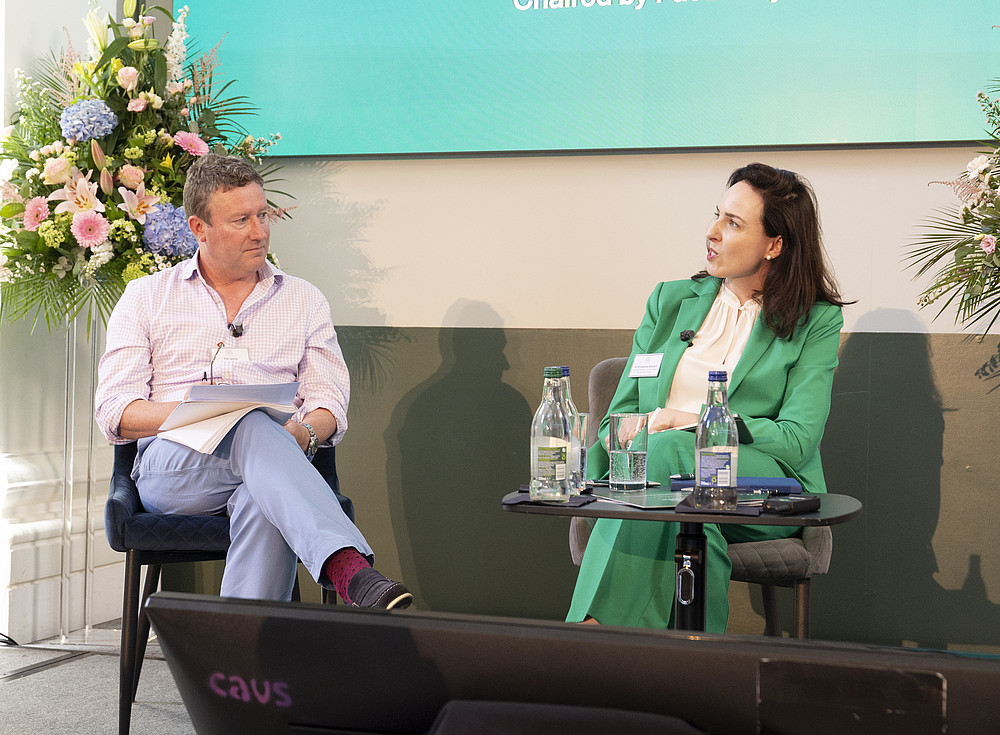
Dr. Ahlborn participated in the opening panel, “Taking the Pulse of the Rules-Based International Order,” together with Stephen Pomper, Chief of Policy at the International Crisis Group and Professor Federico Fabbrini, Professor of Law at Dublin City University (DCU). Pat Leahy, Political Editor of The Irish Times, moderated the discussion. In her intervention, Dr. Ahlborn argued that reports of the demise of international law are greatly exaggerated. Rather than signalling the collapse of the international legal order, contemporary challenges point to a period of profound geopolitical transformation in which international law is adapting to an increasingly multipolar world. She highlighted the continued vitality of international institutions, treaty regimes, and international adjudication, while suggesting that the key question is not whether international law is dead, but what kind of international legal order will emerge from the current transition.
The Summer School featured an outstanding lineup of keynote speakers, including Rose Gottemoeller, former Deputy Secretary General of the North Atlantic Treaty Organization (NATO), Dr. Dmytro Kuleba, former Minister of Foreign Affairs of Ukraine, Avril Haines, former Director of U.S. National Intelligence and former Deputy Director of the Central Intelligence Agency (CIA) and Leo Varadkar, former Taoiseach of Ireland. The discussions addressed key challenges facing the international order, including collective security, strategic rivalry, and the role of economic statecraft in an evolving geopolitical landscape.
The Summer School demonstrated the value of fostering dialogue between academia and practice by bringing together scholars with policymakers, diplomats, legal practitioners, and other experts. It also highlighted the close interplay between international and domestic law in addressing today's geopolitical challenges and provided an important forum for exchanging perspectives across disciplinary and professional boundaries.