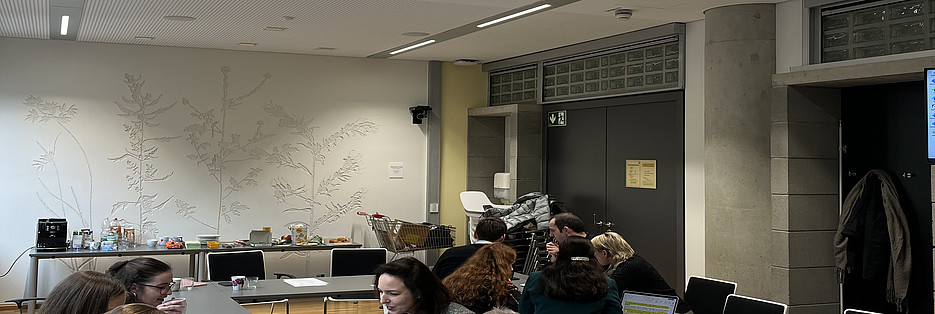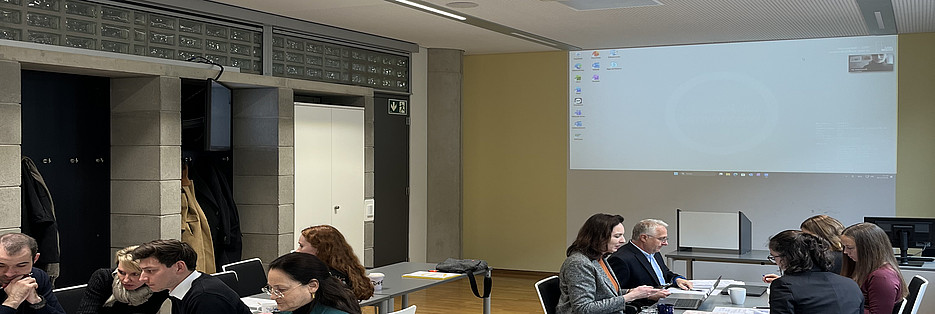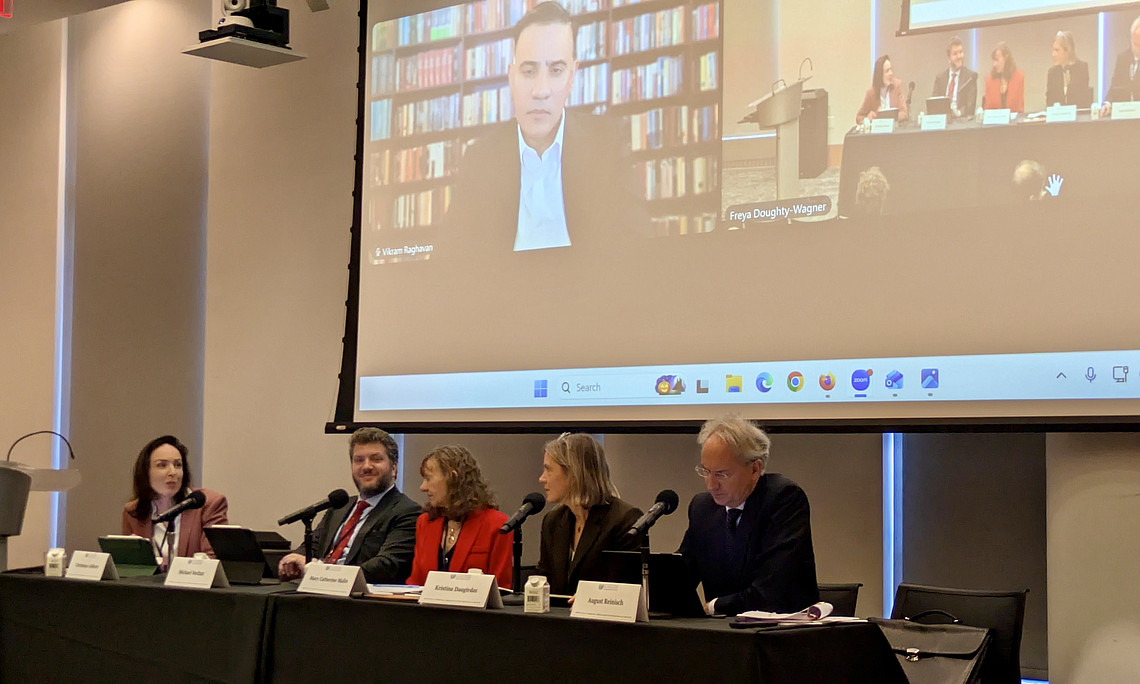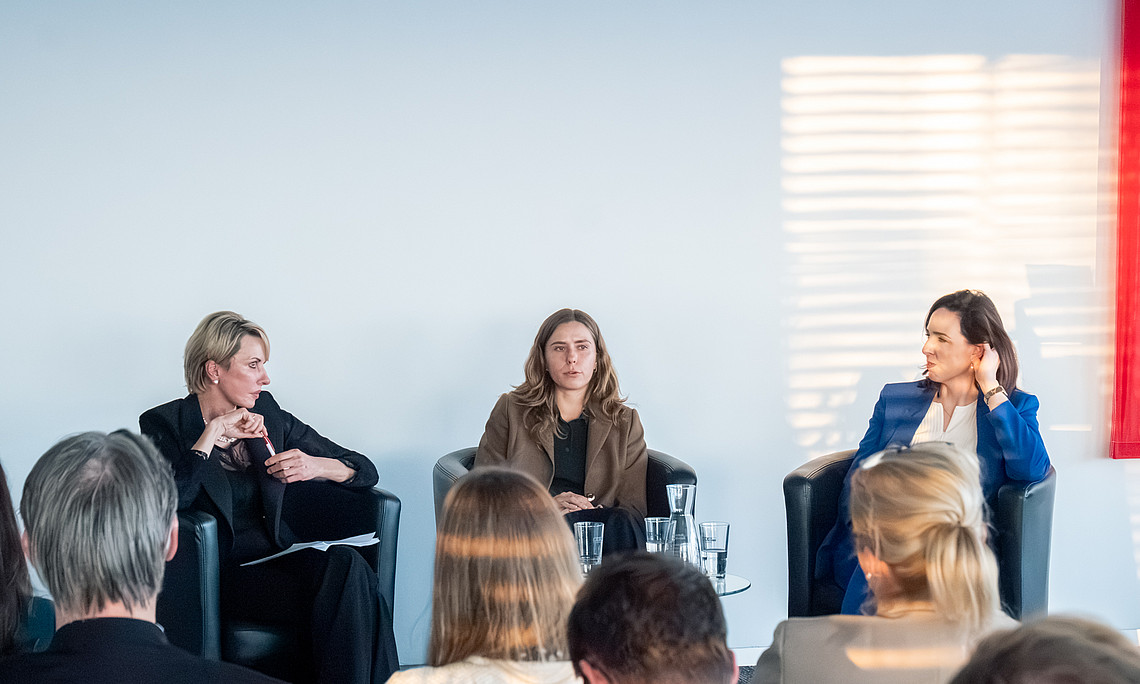



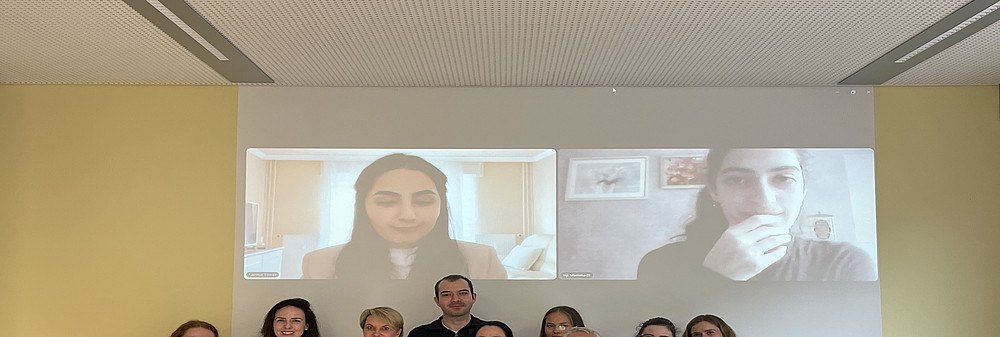
On 28 October 2026, PhD students presented findings and excerpts from their research as part of a doctoral colloquium organised by the Institute for International Law and International Relations. The participants then discussed the findings in small groups and explored them in greater depth in a plenary session. The Institute was particularly pleased to welcome doctoral students from South Africa and Germany.
The colloquium opened with presentations on the prohibition of the use of force in cyberspace and on the highly topical issue of electoral interference through algorithmic recommendations on social media.
The next thematic block, on the continuity of states, addressed the question of how international law should classify the status of sinking states. A participant from Ireland examined the paradoxical question of whether a state without territory should exist. Both presentations sparked a controversial discussion.
Complex questions also arose in relation to work in the field of human rights, such as whether non-state groups must also comply with environmental regulations even in times of war. Furthermore, the participants discussed the ‘legal status’ and its manifestations in the protection of human rights.
The event concluded with a session on energy law. The first part focused on whether the law governing shared resources (oil and gas) also applies to renewable energies, using the example of hydroelectric power stations on shared rivers. A German PhD student enriched the colloquium with a topic on EU law concerning cost allocation for a future European hydrogen network.
The lively discussions provided everyone with a wealth of valuable insights: the PhD students recognised parallels between their projects and gained numerous ideas to consider for their dissertations.
The Institute for International Law and International Relations would like to thank all participants for the lively discussion, Prof. Erika de Wet, LL.M. (Harvard) for chairing the session, as well as Assistant Prof. Christiane Ahlborn, LL.M. (Harvard), Assoc. Prof. Yvonne Karimi-Schmidt and Assoc. Prof. Gerd Oberleitner for their participation and contributions.